Table of contents
- Is Flossing Really Needed If I Brush Twice a Day?
- What Does the Research Say About Flossing?
- What Happens If You Never Floss?
- Why Do My Gums Bleed When I Floss? Should I Stop?
- Is Flossing Necessary Every Day, or Is a Few Times a Week Enough?
- Floss, Water Flosser or Interdental Brush: Which One Works?
- How Do You Floss Properly? (Most People Get This Wrong)
- Conclusion
Yes, flossing is necessary for most people. A toothbrush cleans the front, back and chewing surfaces of your teeth, but it cannot reach the tight gaps between them. That is where plaque builds up quietly, leading to gum disease, cavities between teeth and bad breath. Cleaning between your teeth once a day, with floss or an interdental brush, fills that gap.
Most of us have told a small lie at the dental chair. “Yes, I floss.” The dentist nods, and both of you know the truth. So is flossing necessary, or is it one of those habits that sounds good but changes nothing? Here is the honest answer, without the guilt trip.
Is Flossing Really Needed If I Brush Twice a Day?
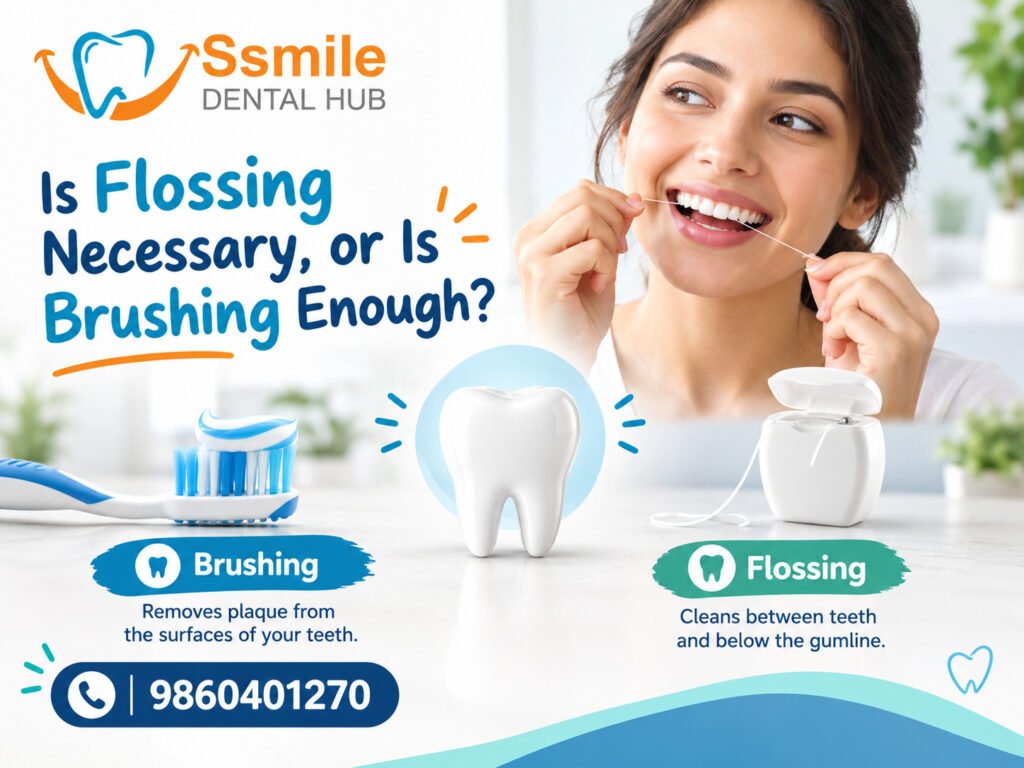
Brushing twice a day is a great start, but it only does part of the job. Think of each tooth as a small box with five sides. Your brush reaches three of them easily. The two sides that touch the neighbouring teeth stay mostly untouched.
Food and plaque that sit in those spaces harden into tartar over time. Once tartar forms, only a professional cleaning can remove it. That is why the team at Ssmile Dental Hub recommends a routine cleaning every six months, even for patients who brush well.
So brushing cleans your teeth. Flossing cleans between them. You need both.
What Does the Research Say About Flossing?
You may have read headlines claiming flossing does not work. Here is what actually happened.
- The headlines: A 2016 news report pointed out that many older flossing studies were small and short. That made the evidence look weak, not that flossing was useless.
- The bigger review: A 2019 Cochrane review of 35 trials found that adding floss or interdental brushes to brushing reduced gum inflammation (gingivitis) more than brushing alone.
- Dental associations: The American Dental Association still recommends cleaning between your teeth once a day.
The takeaway is simple: cleaning between teeth helps your gums, even if the exact tool matters less than doing it regularly.
What Happens If You Never Floss?
Skipping floss does not cause problems overnight. It adds up slowly, which is why many people do not notice until something hurts.
- Bleeding gums: Plaque irritates the gums, which turn red and bleed easily. This is early gum disease.
- Cavities between teeth: These are hard to spot in the mirror and often show up only on an X-ray.
- Bad breath: Trapped food breaks down between teeth and causes a stale smell that mouthwash only hides.
- Gum recession and loose teeth: In advanced gum disease, the bone holding your teeth can weaken.
Why Do My Gums Bleed When I Floss? Should I Stop?
This is the most common reason people give up. In most cases, bleeding means your gums are inflamed, not that flossing is harming them.
Keep flossing gently every day. For most people, the bleeding settles within one to two weeks as the gums heal. If it continues beyond that, or your gums are swollen and painful, get them checked by a dentist. Our experienced dental team sees this often and can tell within a quick check whether it is simple irritation or early gum disease.
Is Flossing Necessary Every Day, or Is a Few Times a Week Enough?
Once a day is the standard advice. Plaque starts to harden into tartar within about a day or two, so daily cleaning stops it before it settles in. Flossing at night works well for most people, since it clears the day’s food before you sleep.
Floss, Water Flosser or Interdental Brush: Which One Works?
The right tool is the one you will actually use.
- String floss: Works well for tight gaps and costs very little. It takes some practice.
- Interdental brushes: Small brushes that fit between teeth. Studies suggest they work very well for people with wider gaps.
- Water flossers: A good option if you have braces, bridges or implants, or find string floss difficult.
- Floss picks: Handy for travel or for beginners who struggle to wrap floss around their fingers.
If you are unsure which suits your teeth, your dentist can show you in a few minutes during a routine check-up.
How Do You Floss Properly? (Most People Get This Wrong)
- Take about 45 cm of floss and wrap most of it around your middle fingers.
- Slide it gently between two teeth. Do not snap it into your gums.
- Curve the floss into a “C” shape around one tooth and move it up and down.
- Repeat on the neighbouring tooth, then move to a fresh section of floss.
- Do not forget the back sides of your last molars.
A common mistake is just pushing the floss in and pulling it out. The up and down scraping along each tooth is what removes the plaque.
Should You Floss Before or After Brushing?
Either works. Some dentists suggest flossing first, since it loosens food and plaque so your toothpaste can reach more surfaces. The order matters far less than doing both every day.
Quick Answers to Common Flossing Questions
Can flossing create gaps between teeth?
No. Proper flossing does not push teeth apart. Gaps that seem to appear are usually from gum swelling going down as your gums get healthier.
Is mouthwash a replacement for flossing?
No. Mouthwash freshens breath and can reduce some bacteria, but it cannot remove plaque stuck between teeth.
When should children start flossing?
Once two teeth touch each other, usually between ages 2 and 6. Parents should help until the child can do it properly, often around age 8 to 10.
Do I need to floss if I have braces?
Yes, even more. Braces trap food easily. A floss threader or a water flosser makes it much easier.
Conclusion
So is flossing necessary? Yes, and it only takes two minutes a day. Start slowly, be gentle with your gums and give it two weeks before you judge the results. Most people notice fresher breath and less bleeding within that time.
At Ssmile Dental Hub, we show patients the right flossing method for their teeth during every check-up, without any lectures. Bleeding gums or overdue for a cleaning? Book your dental check-up and we will take it from there.

Dr. Majusha Dalvi
Since 2006, SSMILE DENTAL CARE in Akurdi, PCMC has been delivering advanced, pain-free dental solutions with a focus on genuine advice and authentic treatment. Led by Dr. Mrs. Manjusha Dalvi (BDS – Pune University, 25+ years of experience), we provide all dental care under one roof. A trusted dentist with 25+ years of clinical excellence in Akurdi, we focus on authentic treatment and lasting results. Our clinic combines genuine care, modern technology, and personalized attention to make every visit pain-free and reassuring.