Table of contents
Maintaining oral health is essential for a beautiful smile and overall well-being. Two common terms you’ll often hear when it comes to dental hygiene are plaque and tartar. Both of these are related to the build-up of substances in your mouth, but they have significant differences. Understanding these differences, how they form, and how to control them can make a big difference in your dental care routine.
In this blog, we’ll explore plaque vs. tartar, highlighting their differences and offering helpful tips on how to prevent them. If you’re looking for a trusted Dentist in Akurdi, Ssmile Dental Hub Akurdi is here to provide expert care tailored to your needs.
What Is Plaque?
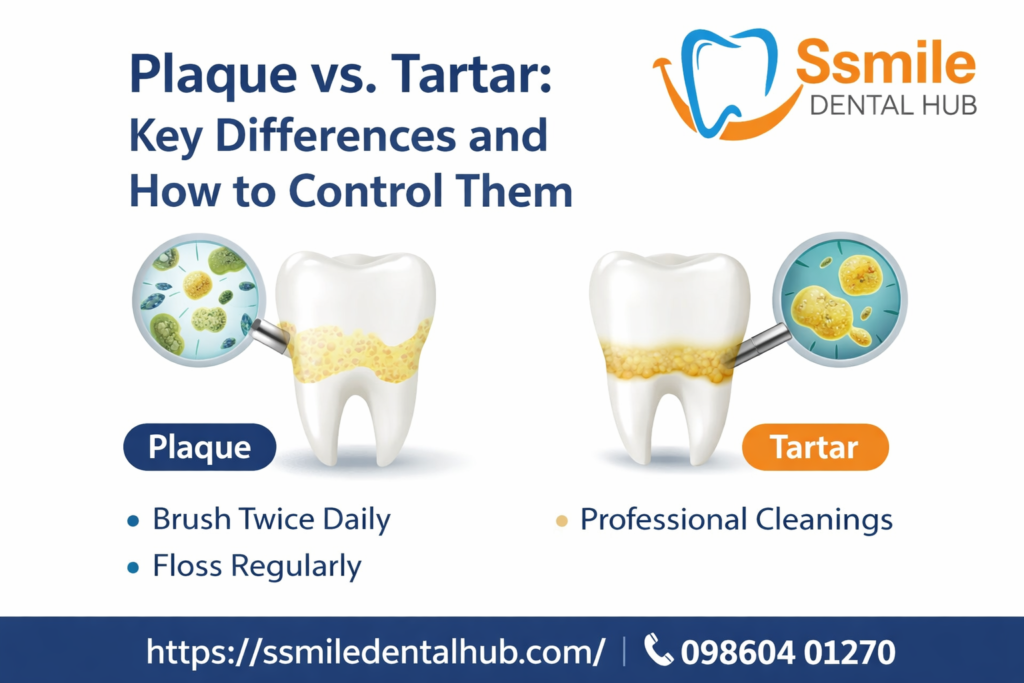
Plaque is a sticky, colorless film that forms on your teeth and gums throughout the day. It’s made up of bacteria, food particles, and saliva. Plaque begins to form just hours after brushing and is the result of bacteria in your mouth feeding on sugars and starches from the foods you eat.
Key Features of Plaque:
- Soft and sticky
- Can be removed easily with regular brushing and flossing
- Builds up on the teeth, especially along the gum line
- If left untreated, plaque can turn into tartar
What Is Tartar?
Tartar, also known as calculus, is hardened plaque that has been left on your teeth for too long. It occurs when plaque is not removed and hardens due to the minerals found in your saliva. Tartar can form both above and below the gum line and can lead to more severe dental problems if not treated.
Key Features of Tartar:
- Hard and rough
- Cannot be removed by regular brushing; requires professional cleaning
- Can lead to gum disease, cavities, and bad breath if left untreated
- Often discolored (yellow or brown), and can be a cosmetic concern.
Key Differences Between Plaque and Tartar
While both plaque and tartar are caused by the same process, there are a few important differences that you should understand:
| Composition | A sticky film of bacteria, food, and saliva | Hardened plaque due to minerals in saliva |
| Appearance | Colorless or light yellow film | Yellow or brown, rough texture |
| Removal | Removed easily with brushing & flossing | Requires professional cleaning |
| Time to Form | Forms in a few hours | Takes days to weeks to form from plaque |
| Effect on Teeth | Can lead to gum disease if not removed | More severe gum disease, cavities, and tooth decay |
How Plaque Turns Into Tartar
Plaque starts forming soon after you eat or drink. If you don’t brush your teeth regularly, the bacteria in the plaque begin to mineralize, or harden, after a few days. This is when plaque turns into tartar.
The key to preventing this transformation is regular oral hygiene. Plaque is easy to remove with consistent brushing and flossing, but once it hardens into tartar, it can only be removed by a dentist during a professional cleaning.
The Consequences of Not Controlling Plaque and Tartar
Not controlling plaque and tartar can lead to serious oral health issues. Let’s look at some of the problems that can occur:
1. Gum Disease (Gingivitis and Periodontitis)
Plaque is the primary cause of gum disease. If it’s not removed, the bacteria in plaque can irritate the gums, causing inflammation and infection. Over time, this can develop into periodontitis, a more serious form of gum disease that can damage your teeth and gums.
2. Tooth Decay and Cavities
Both plaque and tartar harbor harmful bacteria that produce acids. These acids can erode your tooth enamel, leading to cavities and decay.
3. Bad Breath
The bacteria in plaque and tartar can contribute to bad breath (halitosis). This is because the bacteria release foul-smelling compounds.
4. Tooth Discoloration
Tartar, especially when it forms on the front teeth, can cause yellow or brown stains, which are hard to remove with normal brushing.
How to Control Plaque and Tartar
Now that you know the differences between plaque and tartar and the problems they can cause, here are some tips on how to control them effectively:
1. Brush Your Teeth Twice a Day
- Brush for at least two minutes using fluoride toothpaste.
- Use a soft-bristle toothbrush to avoid damaging your gums.
- Don’t forget to brush your tongue and the roof of your mouth, where bacteria can build up.
2. Floss Daily
Flossing helps remove plaque from between your teeth and along the gum line, areas that your toothbrush can’t reach. Make sure to floss gently and regularly.
3. Use Mouthwash
Antiseptic mouthwash helps kill bacteria in your mouth and can assist in reducing plaque build-up. It’s also an easy way to freshen your breath.
4. Visit Your Dentist Regularly
Regular dental check-ups and cleanings (every six months) are essential for removing tartar that can’t be removed by brushing. Your dentist will ensure your teeth stay healthy and clean, reducing your risk of gum disease and cavities.
5. Eat a Balanced Diet
A balanced diet helps prevent plaque buildup. Avoid sugary snacks and drinks, as they can feed the bacteria in your mouth and promote plaque formation. Drink plenty of water to rinse away food particles and bacteria.
6. Use Tartar-Control Toothpaste
Some toothpastes contain special ingredients that help prevent tartar from forming. This can be especially helpful for individuals who are prone to tartar buildup.
Why Choose Ssmile Dental Hub Akurdi?
At Ssmile Dental Hub Akurdi, we understand the importance of good oral hygiene and offer expert care for all your dental needs. Whether you’re looking for a routine check-up or need to address plaque and tartar buildup, our experienced team is here to help. We provide professional cleanings and personalized advice to keep your smile healthy.
If you’re looking for a Dentist in Akurdi, don’t wait! Our clinic is equipped with the latest dental technology, ensuring that your treatments are effective and comfortable. Book your consultation today and take the first step toward better oral health.
Conclusion
Plaque and tartar may seem like minor issues, but they can lead to severe oral health problems if not controlled properly. By brushing, flossing, and visiting your dentist regularly, you can keep your teeth healthy and prevent the formation of tartar.
If you’re in the Akurdi area and need professional help, contact Ssmile Dental Hub Akurdi today. We’re here to provide you with the best dental care in a friendly, welcoming environment.
Book Your Consultation Today!
Don’t let plaque and tartar take over your smile. Take action now and ensure a brighter, healthier future for your teeth!

Ssmile Dental Hub
Since 2006, SSMILE DENTAL CARE in Akurdi, PCMC has been delivering advanced, pain-free dental solutions with a focus on genuine advice and authentic treatment. Led by Dr. Mrs. Manjusha Dalvi (BDS – Pune University, 25+ years of experience), we provide all dental care under one roof. A trusted dentist with 25+ years of clinical excellence in Akurdi, we focus on authentic treatment and lasting results. Our clinic combines genuine care, modern technology, and personalized attention to make every visit pain-free and reassuring.