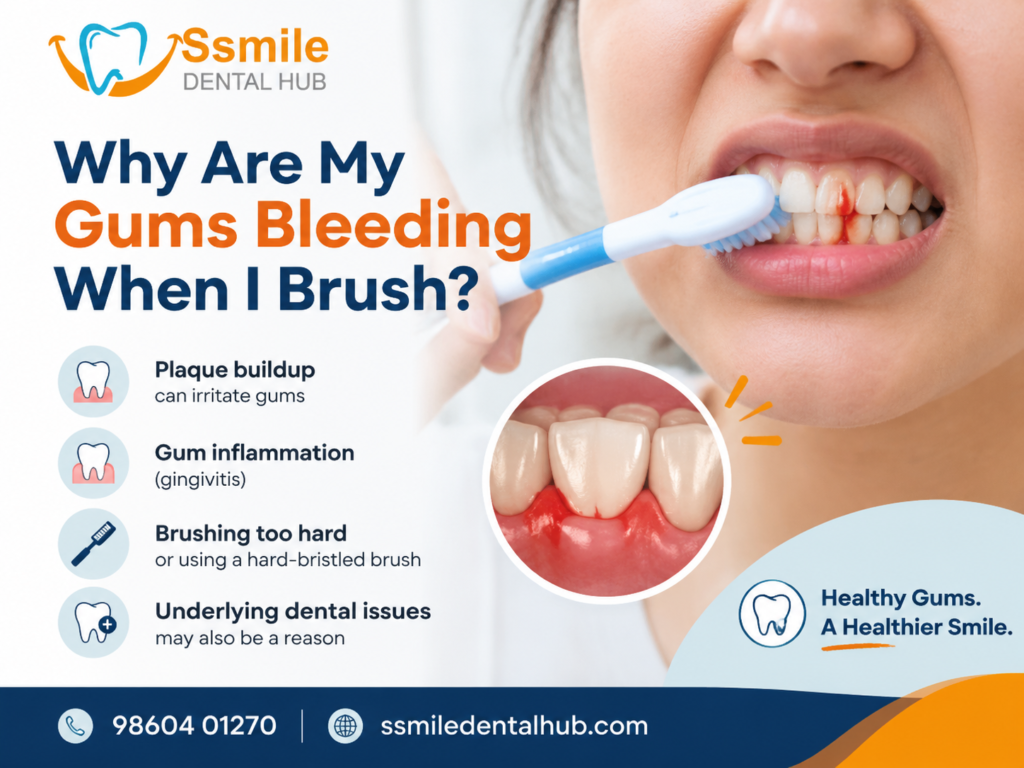
Key Takeaways
✓ Bleeding gums while brushing are commonly associated with gum inflammation, particularly gingivitis.
✓ Plaque that remains around the gumline can irritate the gums and cause redness, swelling and bleeding.
✓ Brushing too aggressively or using a hard-bristled toothbrush can also irritate gum tissue.
✓ Tartar cannot be removed by normal brushing and may require professional dental cleaning.
✓ Hormonal changes, smoking, diabetes, certain medicines and other health factors can also affect gum health.
✓ Healthy gums should not regularly bleed during brushing or flossing.
✓ If your gums continue to bleed, are swollen or painful or you notice loose teeth, consult a dentist for an evaluation.
Many people notice a little pink or red colour in the sink after brushing and assume they have simply brushed too hard. Sometimes that may be the reason, but repeated gum bleeding should not be treated as normal.
Your gums can give you early signs that something needs attention. Plaque buildup, gum inflammation, tartar and changes in your oral health can all contribute to bleeding. In some cases, factors such as smoking, diabetes, hormonal changes or certain medicines may also affect gum health.
At Ssmile Dental Hub in Akurdi, Dr. Manjusha Dalvi focuses on identifying the reason behind gum problems and helping patients maintain healthier teeth and gums through appropriate dental care.
What Causes Gums to Bleed When You Brush?
There is not always one single reason for bleeding gums. Understanding the possible causes can help you decide when a dental check-up may be needed.
1. Plaque Buildup
Plaque is a sticky film of bacteria that develops on teeth. When it is not removed properly, particularly around the gumline and between teeth, it can irritate the gums.
Over time, the gums may become red, swollen and more likely to bleed during brushing or flossing. This is one of the common signs of gingivitis.
Regular brushing and cleaning between the teeth can help control plaque buildup.
2. Gingivitis
Gingivitis is an early form of gum disease. It commonly causes gums to become:
- Red
- Swollen
- Tender
- Easily irritated
- Prone to bleeding
The good news is that gingivitis can often be managed and reversed with good oral hygiene and professional dental care.
However, leaving gum inflammation untreated can allow gum disease to progress.
3. Tartar Buildup
When plaque is not removed, it can harden into tartar. Unlike plaque, tartar cannot simply be brushed away at home.
Tartar can make cleaning around the gumline more difficult and contribute to gum inflammation and bleeding. Professional dental cleaning may be required to remove it.
If you notice hard deposits around your teeth along with frequent gum bleeding, a dental examination can help determine whether professional cleaning is needed.
4. Brushing Too Hard
More pressure does not necessarily mean cleaner teeth.
Brushing aggressively or using a toothbrush with hard bristles can irritate the gum tissue. The American Dental Association recommends using a soft-bristled toothbrush and gentle pressure when brushing.
Try using gentle, short strokes around the gumline instead of scrubbing forcefully.
5. Not Cleaning Between Your Teeth
A toothbrush cannot effectively clean every area between closely positioned teeth.
Food particles and plaque can remain between teeth and along the gumline, where they may contribute to inflammation. Interdental cleaning with floss or another suitable interdental cleaner can help remove plaque from these areas.
If you are unsure whether floss, interdental brushes or another method is right for you, ask your dentist for personalised guidance.
Can Bleeding Gums Be a Sign of Gum Disease?
Yes. Regular bleeding can be one of the early signs of gum disease.
Gingivitis is the milder form and usually involves inflammation of the gums. If gum disease progresses to periodontitis, the tissues and bone supporting the teeth can become affected. Advanced gum disease may lead to gum recession, loose teeth and eventually tooth loss.
This is why persistent bleeding should not simply be dismissed as a normal part of brushing.
Other Factors That May Affect Gum Bleeding
Plaque and gum disease are common causes, but other factors can also play a role.
Hormonal Changes
Hormonal changes can make some people more susceptible to gum inflammation. This can occur during certain stages of life, including pregnancy and menopause.
Smoking and Tobacco Use
Smoking and tobacco use can increase the risk of gum disease and can also interfere with gum healing.
Diabetes
People with diabetes may have a higher risk of gum problems, and gum disease can sometimes be more difficult to manage. Bleeding, red or swollen gums should be discussed with a dental professional.
Certain Medicines or Health Conditions
Some medicines and medical conditions may affect oral health or contribute to gum problems. If you have persistent bleeding and take regular medicines, tell your dentist about them.
What Should You Do If Your Gums Bleed While Brushing?
If bleeding happens occasionally, review your brushing and oral hygiene routine.
Follow these basic steps:
- Use a soft-bristled toothbrush.
- Brush gently twice a day with fluoride toothpaste.
- Spend around two minutes brushing.
- Clean between your teeth every day.
- Avoid aggressive scrubbing around the gumline.
- Do not stop cleaning your teeth simply because your gums bleed.
- Arrange a dental check-up if bleeding continues or keeps returning.
If tartar or gum disease is contributing to the bleeding, home care alone may not be enough.
When Should You See a Dentist for Bleeding Gums?
You should consider a dental appointment if your gums regularly bleed when brushing or flossing.
A check-up becomes particularly important if you also notice:
- Red or swollen gums
- Persistent bad breath
- Gum tenderness
- Receding gums
- Loose or sensitive teeth
- Pain while chewing
- Changes in how your teeth fit together
- Pus around the gums
These symptoms can indicate more advanced gum problems and should be assessed by a dental professional.
Very painful or severely swollen gums, loose teeth or unusual ulcers or lumps in the mouth require prompt dental assessment.
How a Dentist Can Help With Bleeding Gums
The right treatment depends on what is causing the bleeding.
During a dental examination, the dentist may assess your gums, plaque and tartar levels and the overall condition of your teeth. Depending on the findings, treatment may include professional cleaning, improved home-care guidance or further periodontal evaluation.
At Ssmile Dental Hub, Akurdi, Dr. Manjusha Dalvi can assess your gum health and recommend care based on your individual dental needs.
The goal is not simply to stop the bleeding temporarily but to identify and manage the underlying cause.
How to Prevent Bleeding Gums
Good daily oral hygiene can help reduce the risk of gum inflammation.
Brush Twice a Day
Brush twice a day for around two minutes using fluoride toothpaste. Use a soft-bristled toothbrush and gentle pressure.
Clean Between Your Teeth
Use floss or another suitable interdental cleaner once a day to remove plaque and food particles from areas a toothbrush cannot reach effectively.
Have Regular Dental Check-Ups
Regular dental visits can help identify plaque, tartar and gum problems before they become more difficult to manage.
Avoid Tobacco
Smoking and tobacco use increase the risk of gum disease and can make healing more difficult.
Pay Attention to Changes
Do not wait for severe pain before seeking dental care. Gum disease can sometimes develop without significant discomfort in its early stages.
Frequently Asked Questions About Bleeding Gums
1. Is it normal for gums to bleed when brushing?
Regular gum bleeding is not something you should ignore. It can be a sign of gum inflammation or other oral health problems, particularly when it happens repeatedly.
2. Why do my gums bleed even though I brush every day?
Brushing every day is important, but plaque can remain around the gumline and between teeth. Brushing technique, tartar buildup and other factors can also contribute to gum bleeding.
3. Should I stop brushing if my gums bleed?
No. Stopping oral hygiene can allow plaque to build up further. Instead, use a soft-bristled toothbrush and gentle technique. If bleeding continues, have your gums checked by a dentist.
4. Can brushing too hard cause bleeding gums?
Yes. Excessive brushing pressure can irritate gum tissue. A soft-bristled toothbrush and gentle brushing technique are recommended.
5. Can tartar cause bleeding gums?
Yes. Tartar can make it harder to keep the gumline clean and is associated with gum inflammation and bleeding. Tartar requires professional removal rather than ordinary brushing.
6. How long should I wait before seeing a dentist?
If your gums continue to bleed or the bleeding keeps returning, it is better to schedule a dental examination rather than waiting for the problem to become painful.
7. Can gum disease cause bad breath?
Yes. Gum disease can be associated with persistent bad breath or a bad taste in the mouth.
8. Can diabetes affect bleeding gums?
Yes. Diabetes is associated with an increased risk of gum disease, and gum problems may be more difficult to manage in people with diabetes.
Conclusion
If you have been asking yourself, “Why are my gums bleeding when I brush?”, do not automatically assume that it is just because you are brushing too hard. Plaque buildup, gingivitis, tartar, brushing technique and other health factors can all contribute to bleeding gums.
Good brushing, daily cleaning between your teeth and regular dental check-ups are important for maintaining healthy gums. If bleeding continues or you notice swelling, pain, bad breath, gum recession or loose teeth, a dental examination can help identify the cause early.
At Ssmile Dental Hub in Akurdi, Dr. Manjusha Dalvi provides personalised dental care focused on maintaining healthy teeth and gums and addressing oral health concerns based on individual needs. If you have concerns about bleeding gums, you can contact our dental team for an appointment.

Dr. Majusha Dalvi
Since 2006, SSMILE DENTAL CARE in Akurdi, PCMC has been delivering advanced, pain-free dental solutions with a focus on genuine advice and authentic treatment. Led by Dr. Mrs. Manjusha Dalvi (BDS – Pune University, 25+ years of experience), we provide all dental care under one roof. A trusted dentist with 25+ years of clinical excellence in Akurdi, we focus on authentic treatment and lasting results. Our clinic combines genuine care, modern technology, and personalized attention to make every visit pain-free and reassuring.